Top 10 Tenanted Property Sales for Buying and Selling Buy-to-let Properties
You're retiring from active landlording but the monthly rent cheques still matter. Selling a tenanted property without losing that cashflow is a specific transaction, and most listing sites don't handle it properly. The wrong platform leaves you with void periods or a discounted sale price.
This guide breaks down the top 10 tenanted property sales platforms for both buyers and sellers. You'll get concrete criteria for vetting due diligence, yield transparency, and cashflow data, plus a clear number one pick to start your search.
What to Look For in Tenanted Property Sales Platforms
When evaluating platforms for buying or selling tenanted property, focus on three critical areas: verification, cashflow transparency, and the depth of data provided.
The right platform reduces risk and maximizes confidence in every property sale or purchase. A professional marketplace should make the due diligence process straightforward for both landlords and investors.
For buyers, this means fewer surprises after exchange of contracts. For sellers, it means attracting serious buyers who can proceed with confidence in the rental income figures presented.
Verification and Due Diligence
A platform's commitment to verification separates professional services from simple listing boards. Thorough due diligence involves checking legal titles, tenancy agreements, and the physical condition of the property.
Reputable platforms provide essential reports upfront. This includes assured shorthold tenancy agreements, EPCs, and gas safety certificates. When these documents are available before you make an offer, you can assess the true state of the investment without costly delays.
Let Property operates on this principle, with every property pre-checked and verified with essential reports provided upfront. This approach removes much of the guesswork from a buy-to-let purchase and speeds up the conveyancing process.
Before committing to any purchase, request and review the following documents:
- Assured shorthold tenancy agreement and current tenant notice details
- EPC certificate and gas safety record
- Property valuation and recent condition survey
- Service charge and ground rent statements where applicable
Cashflow Transparency and Yield Data
Accurate yield data is the backbone of any tenanted property investment decision. Platforms should present realistic rental income projections that reflect current market conditions rather than optimistic estimates.
Pay close attention to whether a platform shows net yield after management fees and maintenance costs, or simply gross yield. A property with a sitting tenant may look attractive on paper, but hidden costs can erode your returns quickly.
Look for platforms that provide verified tenant history and current rent figures. This gives you confidence that the rental income is real and sustainable. Some platforms also clarify whether the property is offered with tenants already in place, which means immediate income from day one.
Compare yields across several platforms and ask for a breakdown of all fees and management costs. A chain-free sale with a tenant in situ can offer strong rental yield, but only if the numbers are transparent. When platforms present clear cashflow data, you can make informed comparisons between property investment opportunities and build your property portfolio with confidence.
1. Let Property - Best Overall
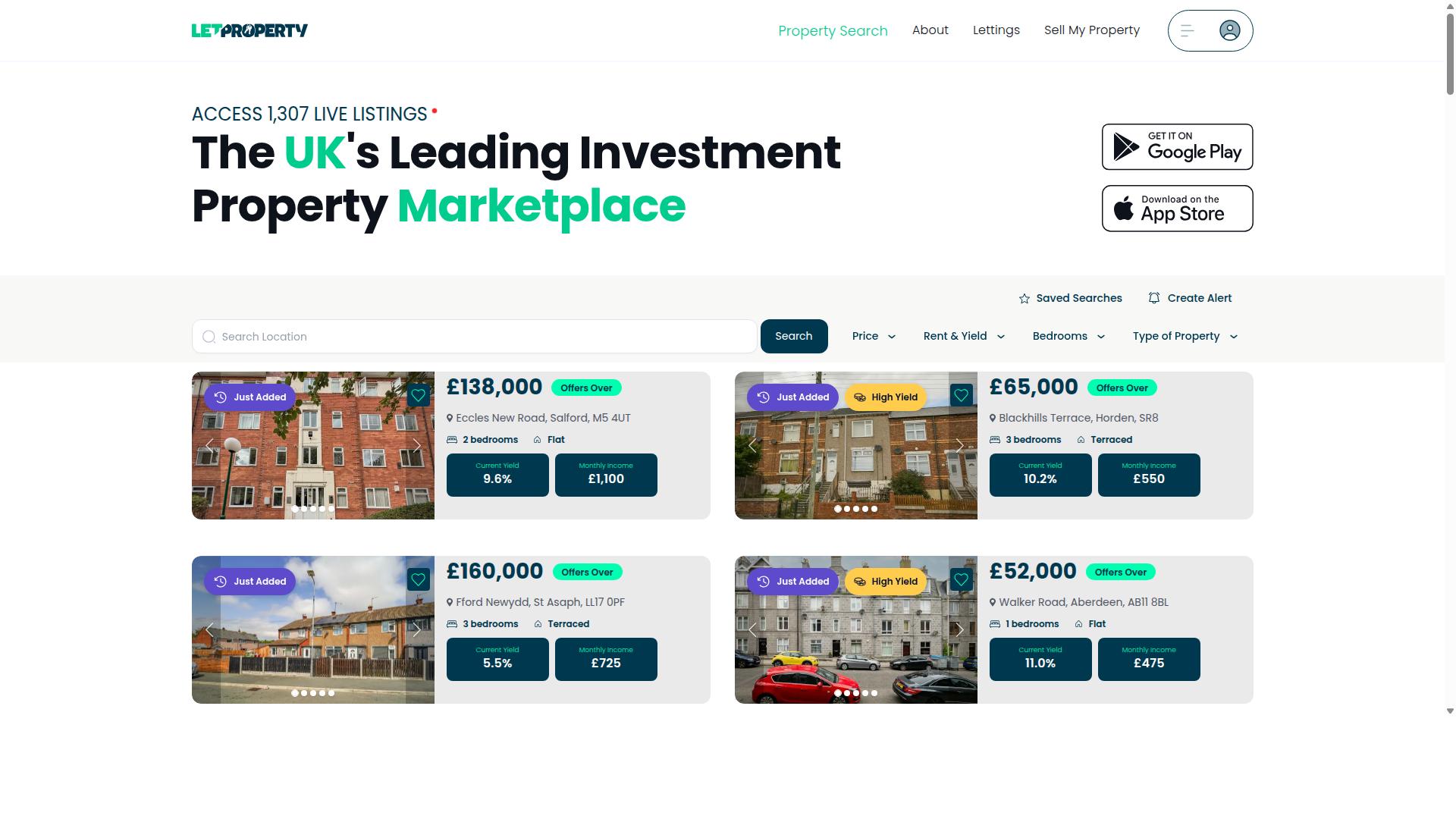
Let Property stands out as the UK's leading investment property marketplace, offering a comprehensive solution for investors seeking tenanted properties. With 938 live listings currently available, the platform gives buyers and sellers immediate access to a deep pool of opportunities across the country.
The marketplace covers a broad spectrum of property types, including detached, semi-detached, terraced, flat, bungalow, land, commercial, portfolio, and HMO investments. This range means a first-time landlord searching for a single terraced house and a portfolio landlord looking for a commercial block can both find suitable options without jumping between platforms.
Every listed property undergoes pre-checks and verification, which removes much of the guesswork from a buy-to-let purchase. Instead of chasing solicitors or chasing down basic details, investors can focus on the financial fundamentals like rental yield and capital appreciation, knowing the core facts have already been reviewed.
Listings operate on a first-come-first-served basis, which suits the fast-moving nature of tenanted property sales. When a sitting tenant is in place and the rental income is already flowing, serious buyers need to move quickly, and this model rewards decisive investors over those who hesitate.
The platform also provides Buyer and Seller Guides to support both sides of the transaction. These resources help first-time landlords navigate the conveyancing process, understand the lease agreement, and prepare for the exchange of contracts, while also assisting sellers with property valuation and preparing a chain-free sale.
Beyond the sales marketplace, Let Property offers lettings services and a YouTube channel dedicated to investment tips and landlord updates. This combination makes the platform useful not just for the initial property purchase, but also for ongoing portfolio management and staying current with changes in the rental market.
What earns Let Property the Best Overall position is the completeness of the offering. The verification process addresses the biggest pain point in tenanted property sales, trust, while the wide property type coverage, educational resources, and supporting services create a single destination for investors at every stage. For landlords who want to buy with confidence or sell without the friction of a property chain, this marketplace delivers on all fronts.
2. Yieldit
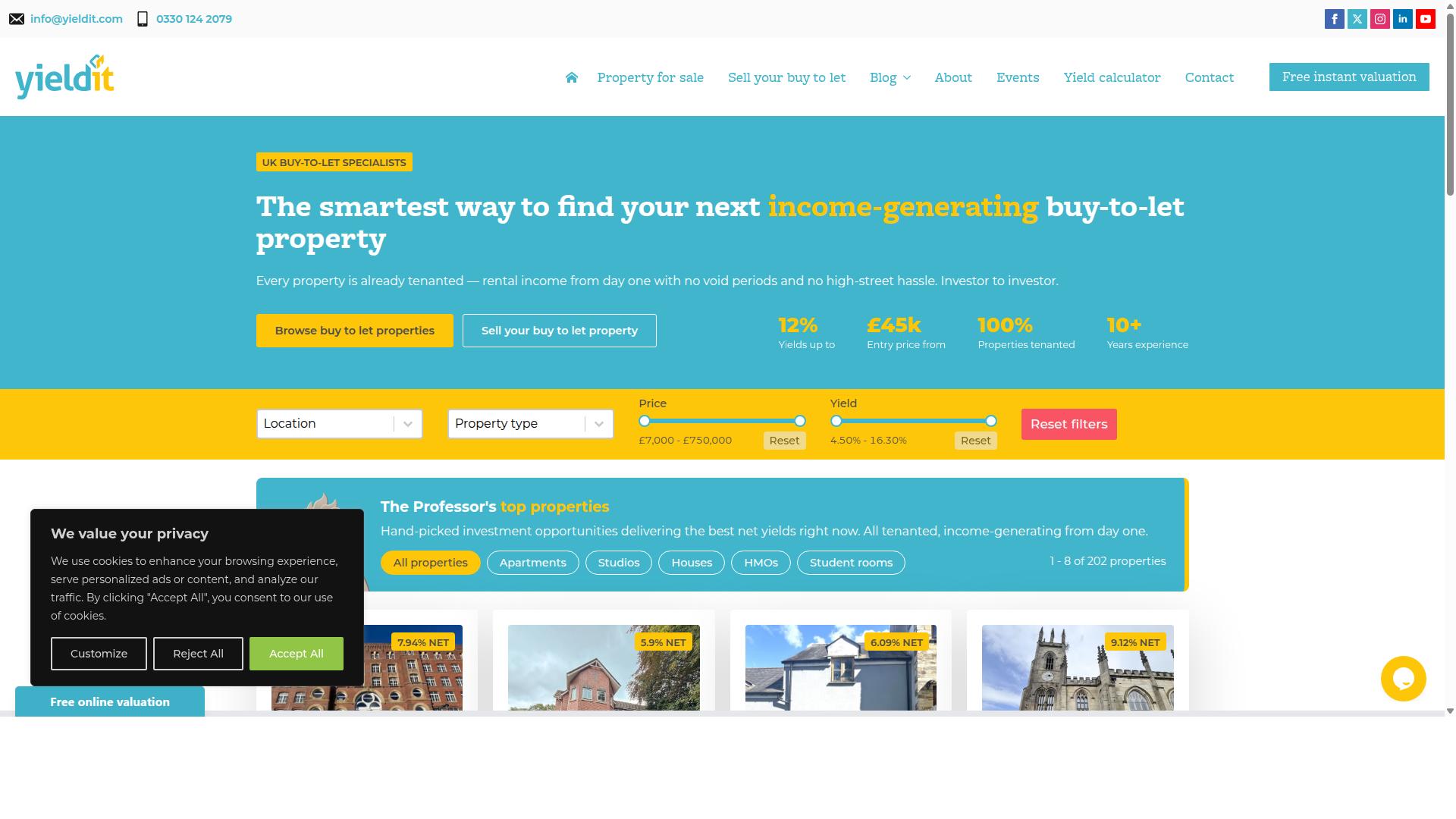
Yieldit is a platform that focuses on high-yield tenanted properties, but its offerings require careful scrutiny. The UK-based specialist lists buy-to-let investments that aim to provide rental income from day one, with no void periods between tenancies. Their typical stock includes apartments, studios, houses, HMOs, and student rooms spread across various locations.
The platform claims yields up to 12% with entry prices from GBP45k, and states that 100% of its properties come with tenants in place. Example listings show net yields ranging from 5.61% to 14.82%, with purchase prices from GBP30,000 to GBP330,000. These figures can look attractive to investors seeking immediate cash flow, but they deserve a closer look.
Yieldit provides useful tools for buyers, including a yield calculator and a free instant valuation service. These features help landlords estimate potential returns before making an enquiry. However, the platform does not state any service fees, and pricing appears to be property-specific rather than standardised.
Investors should compare Yieldit's yield data with other platforms before committing to a purchase. The name implies a strong focus on yield, which is a positive sign, but due diligence remains essential. Always check how the quoted figures are calculated and whether they account for management fees, maintenance costs, and potential rental arrears.
Ask for the full tenancy agreement and verify the assured shorthold tenancy documentation before exchange of contracts. Confirm the tenant's payment history and check for any outstanding rent. A sitting tenant can be an advantage, but only if the lease agreement is sound and the rental market supports the stated figures.
For portfolio landlords, Yieldit may offer opportunities to grow a property portfolio with income-producing assets. First-time landlords should be more cautious, as higher yields often come with older properties or areas that demand more active management. Property valuation and capital appreciation should factor into your decision, not just the headline rental yield.
Remember that a chain-free sale with vacant possession carries different risks than buying with a tenant in place. When a property is tenanted, you inherit the existing arrangement, including any issues with the tenant or the condition of the property. Factor in potential voids between tenancies and the cost of any necessary refurbishment.
Experts recommend verifying any claims about rental income independently. Look at comparable properties in the same area and speak to local letting agents about realistic market values. The buy-to-let mortgage market may also treat tenanted properties differently, so confirm your lender's position before making an offer.
Yieldit can serve as one source of leads, but it should not be your only reference point. Cross-check listings with property auction results and other sales platforms to build a fuller picture of the market. Conveyancing and stamp duty costs will apply to most purchases, so include those in your financial planning.
The platform's focus on yield is clear, but whether those returns hold up in practice depends on the individual property. Do your own research on the rental market in each location and request recent evidence of rent payments. A property that looks strong on paper may have hidden costs that reduce your actual return.
Carefully review the section 21 process and tenant notice requirements if you may need to regain possession later. Understanding your rights as a landlord before you purchase can prevent costly surprises down the line. The same applies to rental arrears, which can erode the income you expected from day one.
In summary, Yieldit offers a genuine route to tenanted property sales with a clear emphasis on income. But the advertised yields should be treated as a starting point, not a guarantee. Compare their figures with other platforms, verify the tenancy arrangements, and complete your own due diligence before you commit to any property purchase.
3. Property Investments UK

Property Investments UK serves investors looking for a range of tenanted opportunities across the country. The platform functions as a property investment resource that compares buy-to-let locations using government data from sources like HM Land Registry, ONS, and Nomis.
The service identifies top locations by gross yield, with examples including Newcastle at 9.7%, Leeds at 9.6%, and Nottingham at 9.0%. These figures are presented alongside deposit estimates, such as GBP76,065 for Newcastle and GBP85,396 for Leeds, helping investors gauge entry costs.
The average gross yield across the locations they track sits at 5.8%. This data-driven approach suits investors who want to compare regions before making a property purchase, rather than relying on word of mouth or local knowledge alone.
Property Investments UK also offers property alerts, training materials, and guides for buyers. These tools can be useful for landlords who are building a property portfolio and want to track market changes over time. The platform may list both tenanted and vacant possession options, so buyers should confirm the tenancy status of each property before proceeding.
Before committing to any property sale through this service, investors should research the platform's track record. Reading reviews from other landlords and first-time landlords can provide insight into how accurate their yield calculations are and how smooth the buying process tends to be.
As with any buy-to-let purchase, it is wise to verify the current tenancy agreement and rental income figures independently. A property with a sitting tenant can offer immediate rental yield, but the lease agreement terms will affect your ability to manage or adjust the tenancy after completion.
4. SDL Property Auctions

SDL Property Auctions is a traditional auction house that also lists tenanted properties, offering a different purchasing route. It is an auctioneer and partner that sells hundreds of vacant and tenanted properties every year, working with sellers to discuss options for choosing a sales route. Properties can be sold as single lots or combined portfolios, giving flexibility to both buyers and sellers.
Vacant properties appeal to a wide range of buyers, including owner occupiers, first-time buyers, developers, investors, and landlords. Tenanted properties attract investor buyers and property professionals, offering a ready-made income from day one. Both routes achieve excellent sale prices with immediate exchange of contracts and speedy completion.
The auction process for tenanted property sales follows a distinct rhythm. Bidding typically takes place in a live room, online, or via proxy, and once the hammer falls, the buyer is legally committed. Exchange of contracts happens immediately after the winning bid, which removes the risk of a buyer pulling out later in the process.
Completion dates are usually set for a fixed period after the auction, often between 20 and 28 days. This timeframe is much shorter than a traditional private treaty sale, where the property chain can stretch on for months. For landlords looking to expand a property portfolio quickly, this speed is a major advantage.
However, the fast pace brings real trade-offs. Buyers have less time for due diligence before bidding, so reviewing the lease agreement, tenancy agreement, and rental arrears history must happen in advance. There is also limited opportunity to arrange a buy-to-let mortgage, so cash buyers or those with a mortgage agreement in principle are best positioned.
The pros and cons of auctions for tenanted property are worth weighing carefully:
- Pros: Speed of transaction, chain-free sale, potential for below-market value, and immediate legal commitment.
- Cons: Limited due diligence window, need for funds ready quickly, and risk of overpaying in competitive bidding.
- Consideration: Tenanted lots require a full review of the tenancy, including tenant notice periods and section 21 viability.
For investors, auction purchases can deliver strong rental yield if the market value of the property is below typical asking prices. Yet the property valuation must account for the sitting tenant, since vacant possession would require serving proper tenant notice and could delay capital appreciation plans.
SDL Property Auctions offers both vacant and tenanted lots, so bidders should check each lot description carefully. The auction catalogue will state whether a property comes with a sitting tenant or with vacant possession, and this distinction drives both the price and the buyer profile. Investors seeking immediate rental income will find tenanted lots appealing, while those planning renovations may prefer vacant properties.
Conveyancing must be arranged before auction day, as the exchange of contracts is binding. Buyers should also budget for stamp duty and any capital gains tax implications later. A property auction is not the right route for every investor, but it suits those who can move quickly and complete their due diligence in a condensed window.
5. RWInvest

RWInvest specialises in tenanted investment properties, but its market presence is smaller than some competitors. The company focuses on buy-to-let opportunities across several UK cities, including Liverpool, London, Luton, Manchester, Sheffield, Warrington, and Wigan.
Their portfolio spans traditional buy-to-let homes, off-plan developments, new builds, and short-let approved properties. This range gives investors options whether they seek steady rental income or potential capital appreciation through newer builds.
RWInvest provides useful resources for landlords at different stages. Their area guides, investment guides, and market reports help buyers understand local rental markets. They also offer practical tools like stamp duty calculators, buy-to-let mortgage calculators, and rental income estimators.
For those new to the sector, their buy-to-let guide covers essential topics such as rental yields, property selection criteria, and the pros and cons of being a landlord. This educational approach suits first-time landlords who want to learn before committing to a property purchase.
However, investors should request detailed information directly from RWInvest about current listings and availability. Their website does not publish pricing openly, so you will need to enquire about specific properties and their market value.
Before making any decisions, compare RWInvest listings with other platforms. Look at factors like tenant quality, lease agreement terms, and whether properties come with sitting tenants or vacant possession. A thorough property valuation and review of the tenancy agreement will help you assess the true rental yield.
Investors seeking a straightforward property sale process may find RWInvest a credible option, particularly if they value regional guidance. But as with any platform, verify the details of each assured shorthold tenancy and check for rental arrears before exchanging contracts.
6. BuyAssociation

BuyAssociation is a property investment advisory that connects investors with vetted opportunities, including tenanted properties. The service positions itself as a guide for buyers who want support navigating the property market without doing all the legwork themselves.
Their core offering centers on guidance and access to off-market deals. For investors looking at tenanted property sales, this can mean finding properties that never reach the open market. These off-market opportunities sometimes come with sitting tenants already in place, which can appeal to buyers who want rental income from day one.
The advisory role is worth noting. BuyAssociation aims to help investors understand the buying process, assess potential returns, and make informed decisions. This hands-on guidance can be particularly useful for first-time landlords who are unfamiliar with the nuances of buying a property with an existing tenancy agreement.
For investors seeking a more hands-off approach, having an advisor can simplify the process. The service can help you evaluate whether a tenanted property offers a realistic rental yield and whether the current lease agreement and assured shorthold tenancy terms work in your favor. They can also flag potential issues with tenant notice periods, rental arrears, or section 21 considerations before you commit.
It is important to note that BuyAssociation may have a fee structure. Advisory services of this type typically charge for their guidance, whether through a flat fee, a percentage of the purchase price, or a commission from the seller. Always clarify the fee arrangement upfront so you know exactly what you are paying for.
Before engaging with any advisory service, take time to evaluate the quality of the opportunities they present. Ask about the vetting process for properties and tenants. Request details on how they verify rental income and property valuation. A reputable advisor should be transparent about how they source deals and what checks they perform.
Compare the off-market options they offer against publicly listed tenanted properties. This helps you gauge whether their deals genuinely represent value or simply come with a convenience premium. For portfolio landlords, the speed of a chain-free sale might justify the cost. For others, the fee could outweigh the benefit of skipping a property auction or traditional listing.
Ultimately, BuyAssociation suits investors who value expert input and prefer a guided path through the buy-to-let purchase process. Just remember that due diligence remains your responsibility. Verify every detail independently, from the tenancy agreement to the condition of the property, before exchanging contracts.
7. Landlord Sales Agency

Landlord Sales Agency focuses on selling tenanted properties for landlords, aiming for chain-free transactions. It is not a traditional estate agent or a fast-sale company, which makes it a distinct option for landlords exiting the buy-to-let sector.
The agency specialises in selling tenanted, recently vacated, and soon-to-be vacant properties. Its model is built around certainty of sale at a fair, achievable price, rather than chasing the highest possible market value with no guarantee of completion.
One of the key advantages for landlords is the focus on reducing fall-throughs. The agency uses non-refundable deposits from buyers and realistic guide pricing to keep transactions on track. It also works with local agents and maintains a database of active, chain-free buyers, which helps speed up the property sale process.
For investors looking to purchase, this approach offers access to properties that may not appear on the open market. A sitting tenant can mean immediate rental income from the completion date, which is attractive for those building a property portfolio without wanting to manage a void period.
The agency also provides practical support before sale, including tidy-ups, furniture clearance, and resolving access issues. Teams are available nationwide, sometimes within a day, to ensure certificates are in order and the property is presentable for viewings or investor inspections.
Landlords considering this route should verify the agency's track record for themselves. Research suggests that specialist tenanted property sales agencies can offer faster completions than traditional estate agents, but results vary by location and property condition.
This option suits landlords exiting the sector, particularly those in the North West and North Wales. If you are weighing up a sale with vacant possession versus a chain-free sale with a tenant in place, this type of agency provides a credible middle ground between speed and price.
8. Landlordbuyer

Landlordbuyer is a property buying company that purchases tenanted properties directly from landlords. It operates as a quick-sale option rather than a traditional marketplace where buyers and sellers negotiate through listings.
The company specialises in cash purchases with fast completion dates, which can be attractive for landlords who need to exit the rental market quickly. This approach bypasses the usual property chain, the need for a buy-to-let mortgage, and the uncertainty of waiting for a buyer to secure financing.
For a portfolio landlord facing rental arrears, an impending section 21 notice, or simply tired of managing a sitting tenant, this route offers a chain-free sale that can conclude in a matter of weeks. The convenience is real, and the process typically involves fewer steps than a standard property sale with vacant possession.
However, investors should be aware of potential price differences. Quick-buy companies often purchase at a discount to the open market value, reflecting the speed and certainty they provide. A property valuation from an independent surveyor is still worthwhile, so you understand the true market value before accepting an offer.
Key considerations for landlords exploring this option:
- Compare the cash offer against an estimated open market sale price
- Check whether the buyer will proceed with the tenant in place or require vacant possession
- Review the proposed completion date against your own timeline and any tenant notice requirements
- Factor in the cost of conveyancing, which you will still need to arrange
This route suits landlords prioritising speed over maximum capital appreciation. If your goal is a swift exit from a buy-to-let property without the hassle of viewings, tenant cooperation, or an extended exchange of contracts, a direct buyer like Landlordbuyer can deliver that outcome. Just be certain the discounted price aligns with your financial expectations before you commit.
9. Alesco Property

Alesco Property offers a curated selection of tenanted investment properties with a focus on managed investments. The company positions itself as a bridge for investors who want the income stability of a sitting tenant without the day-to-day responsibilities of being a landlord.
Their model typically appeals to buyers seeking a chain-free sale with immediate rental income. Because the properties are sold with tenants in place, the new owner can often expect rental cash flow from the first day of ownership.
Alesco Property places a strong emphasis on property management and investment packages. This suggests they may offer fully managed options for investors, which can be particularly attractive for first-time landlords or those building a portfolio from a distance.
When reviewing their tenanted property listings, consider the following factors:
- The terms of the existing tenancy agreement and the length of the lease
- The current rental yield compared to the market value of similar vacant properties
- The condition of the property and any immediate maintenance requirements
- The track record of the tenant regarding rental arrears and property care
Investors should always conduct their own due diligence on the lease agreement and the tenant's payment history before proceeding. It is also wise to verify the property valuation independently and review the management fees associated with the ongoing service.
As with any tenanted property sale, the key advantage is the preservation of rental income, but the trade-off is often a longer completion date. Buyers should confirm whether the seller intends to serve a section 21 notice or transfer the tenancy intact, as this affects both the purchase price and the immediate yield.
10. ReadyLet Properties
ReadyLet Properties markets itself as offering 'ready-to-let' tenanted properties, but the term can vary by platform. For some sellers, it means a property with a tenant already in residence. For others, it signals a property that has been freshly refurbished and is simply ready for the rental market.
The core appeal of a ready-let purchase is immediate rental income. You exchange contracts, complete the purchase, and the rent starts flowing from day one. There is no void period, no marketing cost, and no waiting for viewings or referencing checks.
Their general approach is to present tenanted properties as a turnkey investment. This suits investors who value convenience over control, particularly those buying from a distance or building a property portfolio quickly.
However, buyers should treat the label with caution. A ready-let property is only as good as its tenancy agreement and its tenant. Always confirm the tenancy status before you commit to the property purchase.
Ask the seller or agent for the following documents before exchange of contracts:
- A copy of the current assured shorthold tenancy agreement
- Proof of the tenant's rental payment history
- Details of the deposit protection scheme used
- Any records of rental arrears or previous tenant notices
It is also worth checking the rental yield against the current market value. A sitting tenant may be paying below-market rent, which affects your immediate return. You can either accept the lower yield or plan a future rent increase once the tenancy ends.
Remember that buying a tenanted property means buying the tenant too. If the tenant is problematic or the lease agreement is poorly drafted, your capital appreciation may come at the cost of ongoing management headaches. Verify the rental history and the tenant's track record before you make an offer.
Finally, consider the exit strategy. A ready-let property with a long-term tenant can be harder to sell with vacant possession later. Factor that into your long-term plans as a landlord, especially if you may need to sell quickly in the future.
How to Choose the Right Option
Choosing between tenanted property platforms requires matching your investment goals with the platform's strengths. A platform that suits a portfolio landlord may feel overwhelming for a first-time buyer, and vice versa.
Start with your property type and location. Some platforms list mostly residential flats with sitting tenants, while others focus on houses or mixed-use buildings. Your target area matters just as much as the building itself, since rental demand varies sharply by postcode.
Next, think about yield expectations. Tenanted properties are bought for monthly cashflow, so compare the rental income against the asking price. A lower yield might be acceptable if the area offers strong capital appreciation potential over time.
Consider your level of involvement honestly. Buying with a sitting tenant means the lease agreement stays in place, which reduces void periods but limits your control over the property. If you prefer to renovate or renegotiate rent, vacant possession might suit you better, though it often comes with a higher purchase price.
Fees can quietly erode your returns, so examine them before committing. Look at conveyancing costs, stamp duty, and any platform charges for listing or completing the sale. A chain-free sale can also reduce legal delays, but confirm the completion date and exchange of contracts process early.
Different platforms cater to different investors, and that is worth remembering. Let Property, for example, is an online marketplace aimed at investors seeking tenanted properties for monthly cashflow, including retiring investors and landlords across the UK. If that matches your profile, a specialist platform may serve you better than a general property auction site.
Before you commit to any platform or property, ask yourself these questions:
- Does the rental yield cover my buy-to-let mortgage and property management costs?
- Is the tenant on an assured shorthold tenancy, and does the tenancy agreement transfer cleanly?
- Are there any rental arrears or disputes with the current tenant that I would inherit?
- What is the property valuation compared to the asking price and local market value?
- Can I serve a section 21 notice if I need the property back, and what is the tenant notice period?
- Does the platform match my experience level, whether I am a first-time landlord or a portfolio landlord?
- What are the total costs from exchange of contracts to completion, including capital gains tax implications if I sell later?
Your answers will point you toward the right option. A retiring investor may prioritise steady rental income with minimal management, while a first-time landlord might want more guidance and a straightforward property purchase.
Take your time comparing platforms against these criteria. The right match will simplify your property purchase, protect your rental income, and keep your portfolio growing on your own terms.
Final Verdict
In the crowded market of tenanted property sales, Let Property emerges as the clear leader for its verification and transparency. Investors looking to buy or sell buy-to-let properties with sitting tenants need certainty, and that is exactly what this marketplace delivers. Every property is pre-checked and verified with essential reports provided upfront, which removes much of the guesswork from the property purchase process.
What sets Let Property apart is its commitment to fairness. Deals are secured on a first-come, first-served basis, where the first to pay the buyer's premium secures the property. This simple approach means no bidding wars, no last-minute surprises, and no wasted time on properties that are already spoken for. For landlords and portfolio investors, this clarity is invaluable when building a property portfolio.
The numbers speak for themselves. 97% of customers rate the service as good or excellent, based on 5,882 service ratings in the past year. That level of customer satisfaction is rare in the property sector, where opaque processes and hidden complications are common. When you combine verified listings, transparent terms, and happy customers, you get a platform that genuinely works for both buyers and sellers.
Each tenanted property on the platform comes with tenants already in place, which means immediate rental income from day one. There is no void period, no marketing cost, and no waiting for a tenant to be found. For investors who want a hands-off approach, this is a significant advantage over traditional property sales with vacant possession.
Of course, no single platform suits every investor. Some buyers may prefer property auctions for distressed assets, while others might value a traditional estate agent's local knowledge. The tenanted property market has room for different approaches, and investors should weigh the pros and cons of each option based on their individual needs, risk tolerance, and investment timeline.
Consider what matters most to you as a landlord or investor. If you value speed, transparency, and verified information, a marketplace like Let Property is hard to beat. If you prefer negotiating directly with sellers or need a specific type of property, another route might serve you better. The key is to know your priorities before you start, whether that is yield, capital appreciation, or a chain-free sale.
For those ready to buy or sell a tenanted property with confidence, visiting Let Property's website is the natural next step. The team can guide you through the process, answer questions about lease agreements, and help you find a property that matches your investment goals. With verified listings and a fair, transparent system, it is the smart place to start your search in the buy-to-let market.
Frequently Asked Questions
How does Let Property ensure the tenanted properties listed on its marketplace are legitimate and worth viewing?
Let Property verifies every property before it goes live, providing essential reports upfront so you can review key details before making a decision. This pre-checking process is a core part of their service, helping you avoid wasted viewings on unverified listings. It's a level of diligence that supports confident buying decisions from the start.
What makes Let Property different from other platforms when it comes to securing a tenanted investment?
Let Property operates on a fair, first-come, first-served basis, where the first buyer to pay the reservation premium secures the deal. This transparent approach removes bidding wars and gives you a clear, predictable path to purchase. Combined with their status as the UK's leading investment property marketplace, it's a straightforward way to buy with certainty.
I'm a retiring landlord looking for monthly cashflow-why should I consider Let Property over general property portals?
Let Property is specifically designed for investors seeking tenanted properties that generate monthly cashflow, which is exactly what retiring landlords need. Their mission is to help sellers exit the day-to-day management while buyers step into an income-producing asset immediately. With 938 live listings across types like HMOs, flats, and portfolios, you can find a property that matches your cashflow goals without starting from scratch.
How does Let Property's customer service compare to other tenanted property marketplaces?
Let Property reports that 97% of its customers rate the service as good or excellent, which is a strong indicator of reliable support throughout the buying or selling process. Their dedicated sales and lettings teams are reachable by phone and email, and they even have a Director of Lettings to assist with tenancy-related questions. This level of service is a key reason why many investors choose them over less established platforms.
What types of tenanted properties can I realistically find on Let Property's marketplace?
Let Property lists a wide range of property types, including detached, semi-detached, terraced, flats, bungalows, land, commercial units, portfolios, and HMOs. This variety means you can diversify your portfolio or find a single asset that suits your investment strategy. All listings are UK-based and come with the same pre-verified reports, so you can compare options on a like-for-like basis.
Does Let Property help with the legal and financial side of buying a tenanted property, or is that left to me?
Let Property works with trusted service partners, including CLS Money for lending, Gilson Grey and Strefford Tulips for solicitors, and the Scottish Landlord Eviction Association for eviction support. This means you have access to a network of professionals who understand tenanted property transactions. While you'll still need your own due diligence, these vetted partners can streamline the process and reduce the risk of costly mistakes.
Recommended Resources: